Tomato From Seed to Harvest — A Day-Count Journey
A tomato looks simple in a 40-second film — seed, sprout, leaves, a sturdy young plant. In a real garden that is only the opening act. This page pairs the Grow Through Time seed-to-plant film with the full seed-to-harvest timeline from university extension sources, so you can see what the film shows and what lies ahead after it ends.
Be clear about what the film is: “Growing Tomato From Seed — Seed to Plant in 40 Seconds!” documents seed to young plant. It does not carry its own day counter, and we will not pretend it shows a fixed number of days. The stages below use real-world ranges from cited sources — a map, not a promise, because variety, soil warmth, light and weather set the real pace.
Stage by stage: seed to harvest
| Stage | Typical timing | What you see |
|---|---|---|
| Sowing | Day 0 | A small, pale seed sown about 1/4 inch deep in moist mix — the film’s quiet opening frame. |
| Germination | About 6–14 days in warm soil | Root first, then a bent stem pushes up and the two seed leaves open. |
| Seedling | Weeks 2–4 from sowing | Jagged first true leaves replace the smooth seed leaves; the stem thickens in strong light. |
| Young plant | Weeks 4–8 from sowing | More branches, a taller stem, a fuller root system. This is where the film ends. |
| Transplant and vegetative growth | After last frost, in warm soil | Rapid height and leaf growth outdoors; add a cage or stake before the plant gets heavy. |
| Flowering | Several weeks after transplant | Clusters of small yellow flowers; each pollinated flower can become a fruit. |
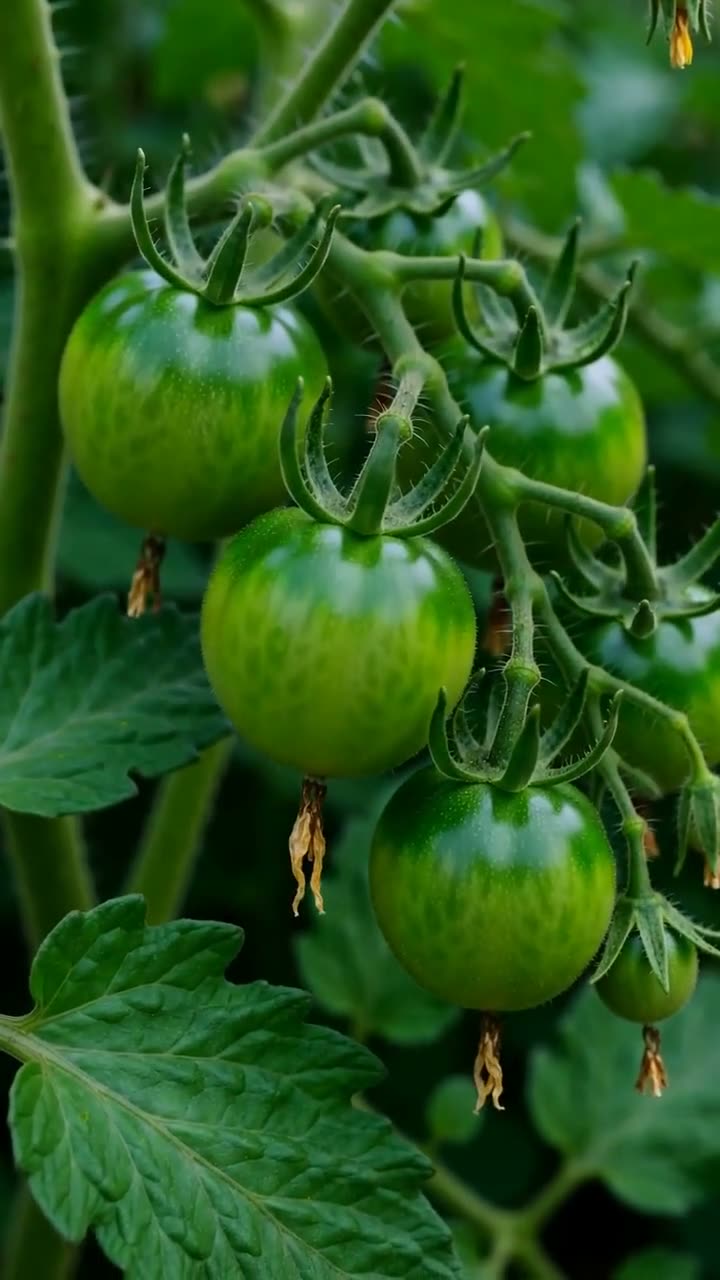
| Fruit set and ripening | About 50–80+ days to harvest, by type | Green fruit swell, then color from the blossom end. Early types ripen sooner. |
Germination: warmth decides the pace
Tomato seed is a warm-season seed. University of California Agriculture and Natural Resources lists the optimum soil temperature as 65 to 85°F, with germination in approximately 6 to 8 days in that range — and over 40 days at 50°F. That explains most “my tomatoes never came up” stories: the seed was not dead, it was cold.
University of Nevada, Reno Extension gives the home-garden version: sow 1/4 inch deep, keep the mix moist but not wet, expect germination in 7 to 14 days, and start seeds indoors 6 to 8 weeks before the average last frost so plants go out into warm soil. Troubleshooting a slow tray? Start with temperature. See How Seed Germination Works and Why Your Seeds Didn’t Germinate.
From young plant to transplant
Once the seed leaves open, light becomes the limiting factor: a seedling on a dim windowsill stretches and grows a thin stem, while strong light keeps it compact. Nevada Extension advises full light as soon as seedlings appear, a temperature around 70°F, and moving seedlings to individual pots when the second set of leaves appears, burying the stem slightly deeper. Tomatoes are unusual here — the buried stem forms extra roots, so a deeper transplant makes a stronger plant.
Before planting out permanently, harden the seedling off — gradually increase sun and outdoor time over several days. A seedling raised indoors has tender leaves and can scorch in a full day of hot sun and wind. You barely see this stage in a time-lapse, but it decides whether the plant thrives after transplant.
Flowering, fruit set and the heat trap
After transplant, the plant spends several weeks building the frame that will carry fruit, then flower clusters appear. Tomatoes are self-pollinating, but the pollen still needs to move: Nevada Extension notes that tapping open flower clusters every few days helps discharge pollen, and insects and wind do the same job outdoors.
Temperature matters again here, in both directions. Nevada Extension warns that most varieties will not set fruit well above 90°F by day and under 55°F at night. A plant can look healthy, flower freely, and still drop its flowers in a heat wave or cold snap — the conditions for pollination are failing, not the fruit.
For harvest timing, Nevada Extension separates types clearly: early types produce a harvest in 50 to 60 days, while main-season cultivars may take up to 80 days or more. Those figures run from transplant and active growth, not from sowing — so add the indoor weeks when you plan, rather than treating the seed packet number as the whole clock.
How to use the film honestly
Watch the film for shape and sequence: root before shoot, seed leaves before true leaves, a small plant before a bushy one. That order is real, and learning it helps you spot when your own plant is stuck. Use the table for timing. For the underground half of the story, compare Bean Germination Stages, Day by Day; for a journey that does carry its own counter, see Eggplant Growth Stages (Day 1–72) and the Seed-to-Harvest Lab home page.
Sources
- University of California Agriculture and Natural Resources, Sacramento County Master Gardeners — Soil Temperature Conditions for Vegetable Seed Germination (GN 154) — https://ucanr.edu/sites/sacmg/files/164220.pdf
- University of Nevada, Reno Extension — Growing Tomatoes in Southern Nevada (SP-99-11) — https://extension.unr.edu/4h/pub.aspx?PubID=3267