How Seed Germination Works — The 5 Stages, Seen From Inside the Soil
Germination is a dry, dormant seed waking up: it soaks up water, switches its food stores back on, pushes out a root first and a shoot second, and finally opens leaves that can feed it. Everything happens in a fixed order — and most of it happens underground, where you normally never see it.
What is inside a seed?
A seed is a packed lunch with a plant folded inside it. The living part is the embryo — a tiny root tip called the radicle, a tiny shoot called the plumule, and one or two seed leaves called cotyledons. Around it sits a store of food, either in the cotyledons themselves (as in beans) or in a separate tissue, all wrapped in a protective seed coat. A dry seed is not dead; it is paused.
Those conditions are simple to list and strict in practice. Seeds need an adequate and continuous supply of moisture, a suitable temperature, and oxygen — and some seeds also need light, according to North Carolina State Extension. Miss any one of them and the sequence below stalls, which is exactly how we diagnose failures in Why Your Seeds Didn't Germinate.
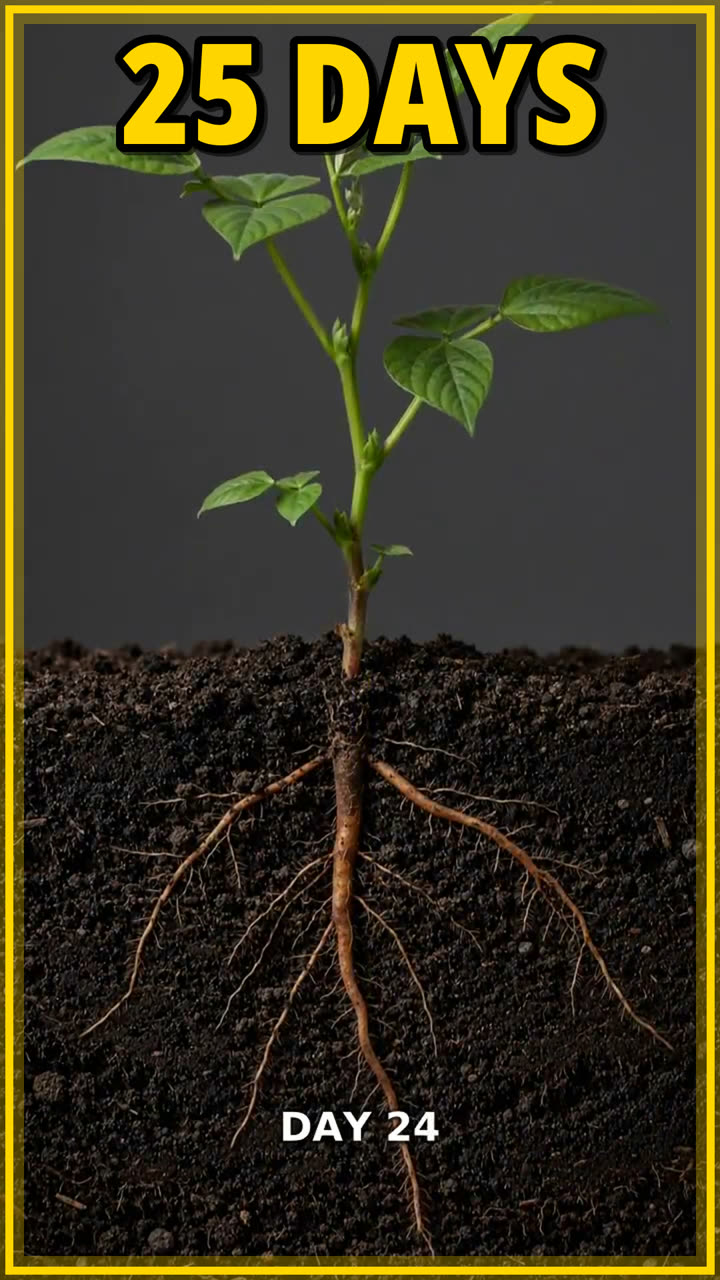
The 5 stages of germination
Stage 1 — Imbibition: the seed drinks
Germination is triggered by the absorption of water through the seed coat, a step called imbibition, as Purdue Extension describes it. The dry seed swells, the coat softens and splits, and water reaches the embryo. This is a physical step before it is a living one: if the seed is not in firm contact with moist soil, uptake is uneven — Purdue notes that uneven seed-to-soil contact can interfere with imbibition and produce uneven germination across a row.
Stage 2 — Activation: the food store switches on
Once rehydrated, the embryo resumes the activity it shut down when the seed dried out. Enzymes become active, respiration rises, and the stored food — starch, protein and oils packed away in the cotyledons or food store — is broken down into fuel for cell division and growth. The seed is now burning its savings: it cannot photosynthesise yet, so if it runs out of stored food before its leaves open, it dies underground.
Stage 3 — Radicle emergence: the root goes first
The first visible sign of germination is always the root. The radicle breaks through the seed coat and grows downward, anchoring the seed and starting to take up water on its own. Purdue Extension describes this same order — radicle first, shoot next — and notes that in warm soil with adequate moisture the radicle can appear within two to three days, while in cooler or drier soil it may take one to two weeks. Botanists count germination itself as complete at this moment: once the radicle is out, the seed has germinated, even though nothing shows above ground yet.
Stage 4 — Shoot emergence: the climb to the light
With an anchor and a water supply in place, the shoot follows. In beans, the stem section below the cotyledons (the hypocotyl) elongates into a bent hook that pushes up through the soil, protecting the delicate growing tip, then straightens at the surface and lifts the cotyledons into the air. This is called epigeal germination — the seed leaves come above ground. In other plants, such as peas, the cotyledons stay below the surface while the shoot rises alone (hypogeal germination). Either way, the race is the same: reach the light before the food store runs out. You can watch the bean version stage by stage in Bean Germination Stages, Day by Day.
Stage 5 — Establishment: the seedling feeds itself
At the surface, the cotyledons open and green up, the plumule unfolds the first true leaves, and photosynthesis begins. Below ground, the radicle branches into a root system that takes over water and nutrient uptake. Once the plant earns more from its leaves than it spends from its stores, the cotyledons shrivel and fall away — and the plant is no longer germinating; it is growing.
| Stage | What happens | What it needs most |
|---|---|---|
| 1. Imbibition | Seed absorbs water, swells, coat splits | Steady moisture and good seed-to-soil contact |
| 2. Activation | Enzymes restart; food stores are broken down for energy | Oxygen for respiration, suitable temperature |
| 3. Radicle emergence | First root breaks out and grows down | Moisture the root can keep reaching |
| 4. Shoot emergence | Stem pushes up; in beans the hook lifts the cotyledons out | A planting depth the shoot can afford |
| 5. Establishment | True leaves open; photosynthesis takes over | Light, and roots that keep up with the leaves |
Temperature sets the speed
Temperature does not change the order of the stages, but it changes the pace dramatically — and every crop has its own range. Oregon State University Extension lists bean seed with a minimum soil temperature of 60°F, an optimum range of 60–85°F, and a maximum of 95°F. The same source shows what that means in days: bean seedlings took about 16 days to appear at 59°F, 11 days at 68°F, 8 days at 77°F, and 6 days at 86°F. A seed sitting longer underground spends more of its food store and faces more days of risk from rot. Clemson Extension gives the same practical floor: do not plant snap beans until the soil is at least 60°F at a depth of 4 inches.
Why the underground view matters
Above ground, germination looks like a single event — a green shoot appears. From inside the soil it is really five events, each with its own requirement and its own way of failing. That is the idea behind this site: the same cross-section view also explains how storage organs form out of sight in How Potatoes Grow Underground, and the format continues in journeys like the Tomato From Seed to Harvest journey.
Keep exploring
- Bean Germination Stages, Day by Day (Day 1–25)
- Why Your Seeds Didn't Germinate — A Stage-by-Stage Diagnosis
- How Potatoes Grow Underground
- Seed-to-Harvest Lab — home
Sources
- Oregon State University Extension — Soil temperature conditions for vegetable seed germination — https://extension.oregonstate.edu/catalog/soil-temperature-conditions-vegetable-seed-germination
- Purdue University Extension — Corn Germination (imbibition and the radicle-first emergence sequence) — https://ag.purdue.edu/department/btny/ppdl/potw-dept-folder/available/corn-germination.html
- North Carolina State University Extension — Seed Starting (moisture, temperature, oxygen and light requirements) — http://wilson.ces.ncsu.edu/news/seeding-starting/
- Clemson University Extension, Home & Garden Information Center — Bush & Pole-Type Snap Beans — https://hgic.clemson.edu/factsheet/bush-pole-type-snap-beans/